

The Unthinkable: A Global Internet Failure
Imagine waking up to find that the internet—the backbone of modern civilization—has simply stopped working. While this scenario sounds like science fiction, it’s worth considering the implications. A massive solar flare, coordinated cyberattack, or catastrophic infrastructure failure could theoretically disrupt global connectivity for hours, days, or even longer. The question isn’t whether it will happen, but whether you’re prepared if it does.
Our Dependency on Cloud-Based Services
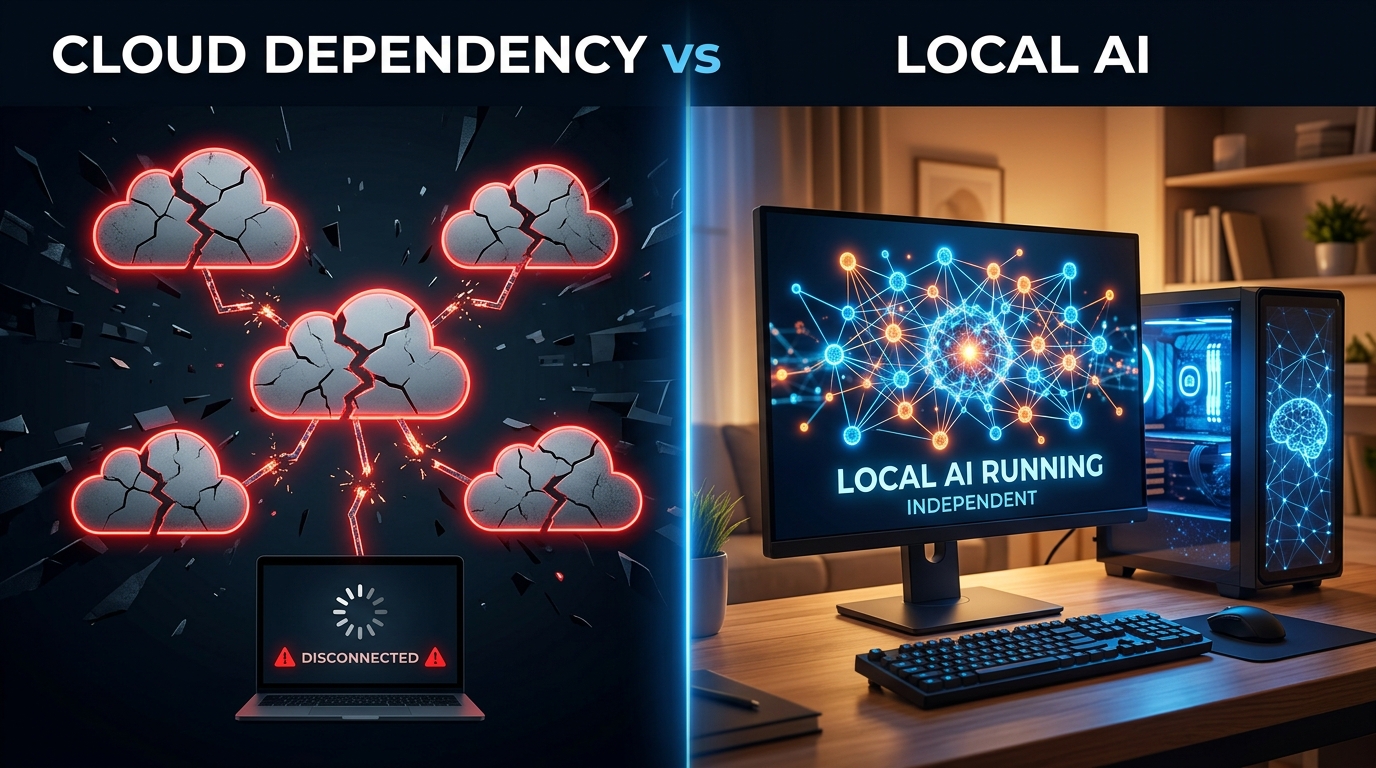
Today, most of us rely entirely on cloud-based services. Your photos are on Google Drive, your documents on OneDrive, your AI assistants on OpenAI’s servers. Even your smart home devices become paperweights without an internet connection. We’ve optimized for convenience at the expense of resilience, creating a single point of failure that affects billions of people simultaneously.
In a widespread internet outage, you’d lose access to:
- Cloud storage and backup systems
- Email and communication platforms
- AI assistants like ChatGPT and Gemini
- Real-time information and news
- Financial services and banking
- Smart home automation
The Case for Local AI Systems
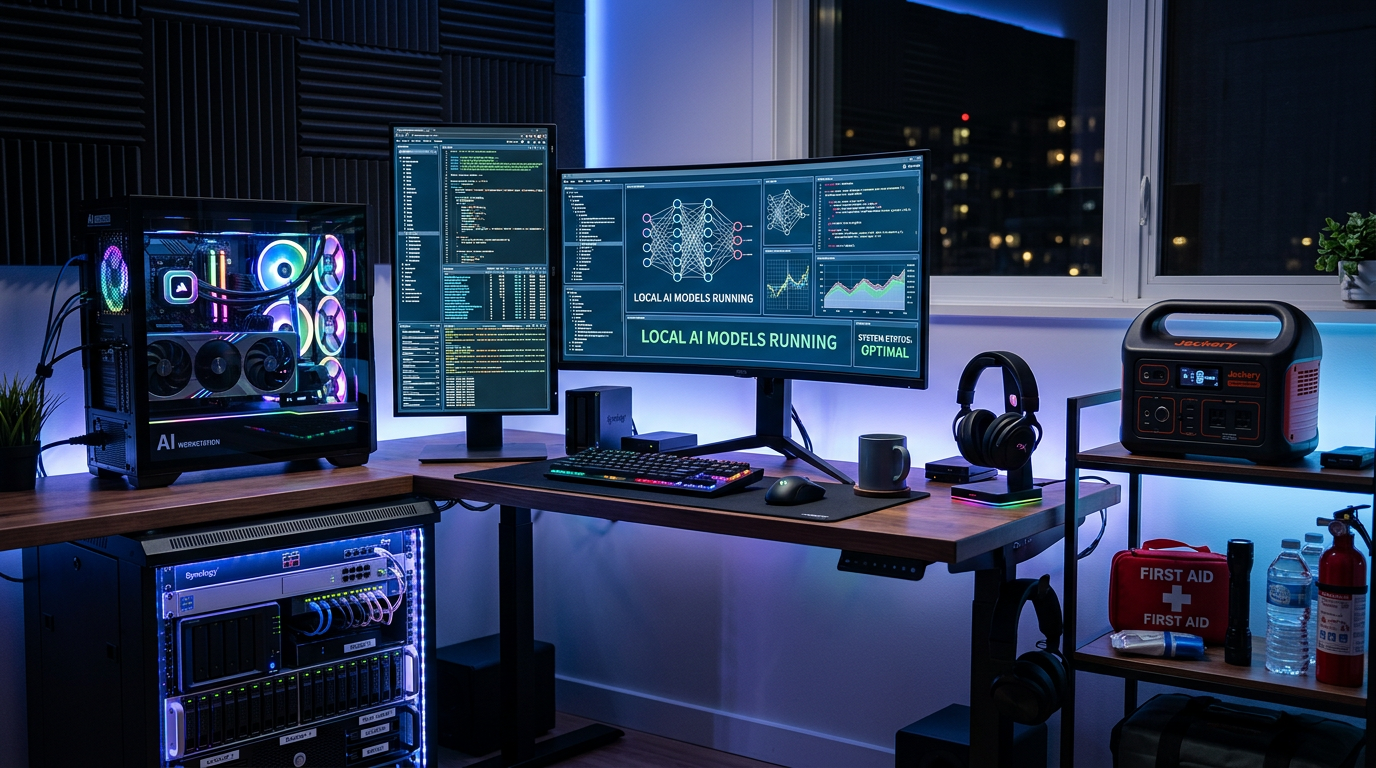
Running AI models locally on your home computer or dedicated hardware offers a compelling alternative. Modern language models like Llama 2, Mistral, and others can run on consumer-grade hardware, providing you with AI capabilities that don’t depend on internet connectivity or corporate servers.
Benefits Beyond Disaster Preparedness
While internet resilience is one advantage, the benefits of local AI extend much further:
Privacy and Data Control
When you run AI locally, your data never leaves your device. Your queries, documents, and personal information remain completely under your control. There’s no data harvesting, no training on your inputs, and no corporate surveillance.
Cost Efficiency
After the initial hardware investment, local AI is essentially free to run. No subscription fees, no per-token charges, no premium tiers. This democratizes access to advanced AI tools for everyone.
Customization and Specialization
Local models can be fine-tuned for your specific needs—whether that’s medical research, coding assistance, creative writing, or industry-specific applications. You’re not limited to a one-size-fits-all corporate product.
Reliability and Speed
No network latency, no server downtime, no rate limiting. Your AI is always available and responds instantly without depending on cloud infrastructure.
Getting Started with Local AI at Home
You don’t need a supercomputer to run AI locally. Here are practical options:
Consumer Laptops and Desktops
Modern GPUs in gaming laptops or desktop computers can run models with 7-13 billion parameters smoothly. Tools like Ollama make installation and management trivial.
Dedicated AI Hardware
Devices like NVIDIA’s Jetson boards or Apple’s Mac Mini with neural engines are specifically designed for local AI inference at reasonable price points.
Raspberry Pi and Edge Devices
For lightweight applications, even a Raspberry Pi can run smaller models, creating an ultra-low-power AI system.
The Practical Reality
Running local AI isn’t about paranoia—it’s about pragmatism. You likely have fire insurance even though your house probably won’t burn down. Similarly, having local AI capabilities provides peace of mind without requiring you to believe in catastrophic scenarios.
Start small. Experiment with tools like Ollama or LM Studio. Download a model like Mistral or Llama 2 and see how it performs on your hardware. You might discover that local AI better serves your needs than cloud alternatives, regardless of whether the internet ever fails.
Conclusion: A Resilient Digital Future
The internet won’t fail tomorrow, but building redundancy and local capabilities makes sense. As AI becomes increasingly central to how we work and live, having independent access to these tools—for both practical and philosophical reasons—is worth considering. Start your journey toward digital resilience today.